
RA Power Solutions Pvt. Ltd. repairs cracked and broken cast components by metal stitching and metal locking. This cold repair method is used on high-capacity diesel engines, compressors, turbines, and other plant machinery.
Replacing a damaged casting is costly and often means long downtime. Welding cast iron adds heat, which can cause new cracks and distortion. Metal stitching and metal locking repair the crack without heat, so the original strength and shape of the part are kept.
We have completed more than 15000 onsite crack repair jobs and have over 47 years of experience. Every repair is done by experienced engineers and comes with a guarantee.
What Is Metal Stitching?
Metal stitching is a cold repair process for cracks in cast iron, cast steel, and aluminium. Holes are drilled along the crack, and specially made keys and stitching pins are fitted into them. These pull the crack edges together and seal the fracture. No welding or heat is used.
What Is Metal Locking?
Metal locking is used together with metal stitching to reinforce the repair. Metal locks and inserts are fitted across the crack to hold the joint in place, stop the crack from spreading, and give the repair long-term strength.
Benefits of Metal Stitching and Metal Locking
- No heat, so no thermal stress or distortion
- The original strength of the parent metal is retained.
- Repair is done onsite, without dismantling the equipment or moving it to a workshop.
- The original profile is maintained, and in most cases no machining is needed afterward.
- Faster and cheaper than replacing the component
- Suitable for cast iron, cast steel, and aluminum
Components We Repair
- Engine blocks
- Cylinder heads
- Turbine casings
- Compressor casings
- Inspection windows and covers
- Broken or damaged castings of large machinery
- Marine and power plant engines (Wartsila, Jenbacher, and other makes)
If a part is broken beyond repair, we can also manufacture a new cast iron piece and fit it by metal locking.
Our Repair Process
- Inspection: We check the crack, its length, and the condition of the component.
- Drilling: Holes are drilled along the crack in a set pattern.
- Stitching: Metal keys and stitching pins are fitted into the holes to pull the crack together.
- Locking: Metal locks are installed across the crack to reinforce the joint.
- Finishing: The surface is finished to keep the original profile, and the repair is checked.
Industries We Serve
- Marine and shipping
- Power plants
- Oil and gas
- Manufacturing and heavy engineering
Send us photos and details of the damaged component, and our engineers will advise the repair method.
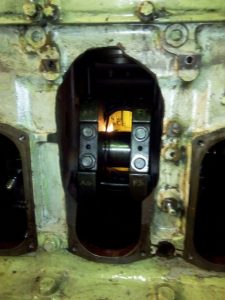
Damaged Inspection Window of Wartsila 18V32
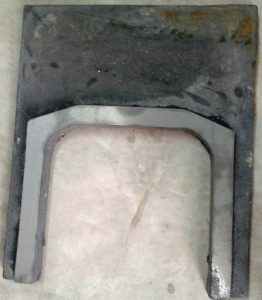
New Piece Manufactured of Cast Iron by RA Power Solutions
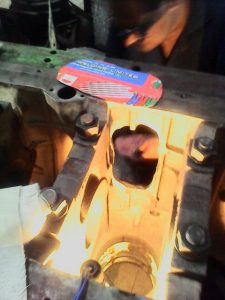
Metal Stitching of Inspection Window of Wartsila Under Process
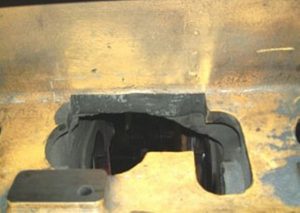
Broken Area of Engine Block
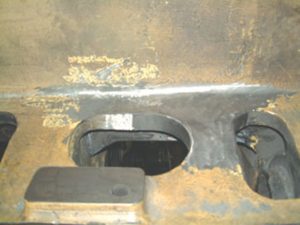
Repaired Engine Block of Jenbacher Engine After Metal Locking
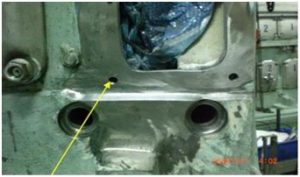
Metal Stitching Done in Engine Block